Written by Adam Rose, journalist & co-anchor of Medlines
One of the fun parts of being a journalist is meeting people from disparate fields and glimpsing into their lives. For more than 20 years, I’ve had opportunities to chat with Super Bowl winning coaches, prime ministers, and lots of engineers, lawyers and doctors.
You might assume such rarified professions have a few things in common. Competitive? Disciplined? Savvy? Sometimes.
But one thing seems universal: Nobody has time to read everything they’re supposed to, much less make sense of it all.
Drinking from a double-blind peer-reviewed firehose
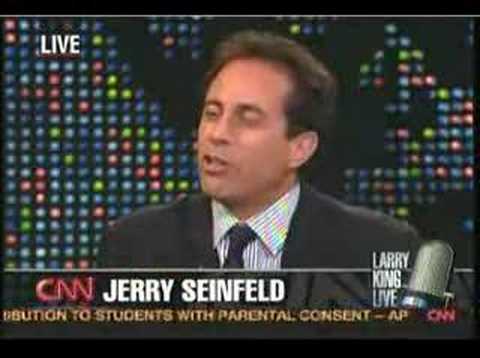
Larry King famously didn’t prepare for interviews. He thought it helped him represent the viewer’s perspective and he could simply rely on his natural curiosity. That led to an iconic moment on CNN when he asked Jerry Seinfeld if his eponymous sitcom had been cancelled.
“I was the number one show on television,” Seinfeld teased in his trademark exasperated tone. “Do you know who I am? … It’s a big difference between being cancelled and being #1! Jeez, can we get a resume in here for me that Larry can go over?”
We can’t all take the Larry King approach in our professional lives. I hear in medicine you call that malpractice. But medical professionals also can’t be expected to read millions of studies published every year.
That’s no hyperbole. Literally millions. There have even been studies about the number of studies. Stop me if you’ve heard this before, but … some of those studies may be conflicting.
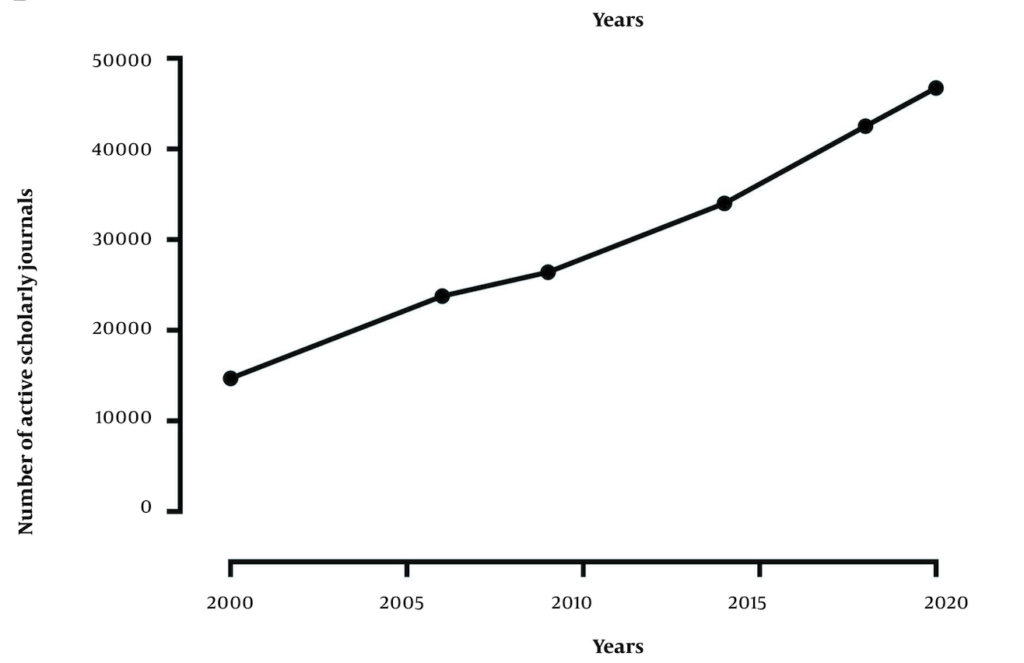
From their first appearance in 1665 to the modern day (specifically, 2009), academics published an estimated 50 million peer-reviewed scholarly articles. The pace has only been picking up. We now see an estimated 3 million studies published globally per year. PubMed alone tracks more than 1.5 million studies each time we take a trip around the sun.
Even the title lengths, abstracts, and mean number of keywords and references are increasing per paper – along with self-citations.
The good news? You will never run out of things to read! And if you want to get published, your options are also increasing:
TMI: Competing for your attention
Marshall McLuhan was an academic who built a foundation for the field of media studies. He coined a popular phrase: “the medium is the message.” In his 1964 book on the subject, he expanded on the idea that a distribution mechanism often determines what gets noticed. Of concern for medical professionals, that means the most important study isn’t necessarily the one you’re most likely to see.
Once upon a time, a physician could plausibly identify a handful of important journals and keep up with them. Today, information also arrives through preprints, newsletters, podcasts, X (anybody remember when #MedTwitter was good?), Bluesky, Substack, news organizations, institutional emails, new episodes of The Pitt, reruns of House, and no less than 300 different Dr. Glaucomflecken characters.
Thankfully, medicine has minimum standards established through schooling, continuing education, board certification and other well-established professional practices. But if that’s all you relied on, there would likely be something missing in your practice. You probably didn’t get into medicine without a thirst for knowledge. At the same time, there can be a temptation to consume so much that it becomes overwhelming.
Physician, heal thy media consumption habits?

When you have too much of something, often what’s missing is deliberateness.
So ask yourself: Do I need a media diet?
Physicians and other medical professionals are already familiar with diet in other contexts; consuming everything indiscriminately isn’t healthy. The same is true of information.
A good media diet isn’t about reading less. It’s about reading intentionally. Consider things like quality, variety, and source. Above all, plan it like any other diet.
I like to set a reminder every few months to cull through my newsletters, social media follows, and other subscriptions. As a journalist, it’s how I reign in my instinct to keep up with everything in the world. As a medical professional, you may find that investing a couple hours in this process gives you back more time in the long run.
Some tips for planning your first media diet:
- Audit what you actually consume, not what you think you consume. Does your inbox have some prominent journals that are never opened? Have you considered what percentage of your information comes through an algorithm?
- Recognize your trust proxies. Nobody can independently verify everything. We all outsource cognitive work to people we trust: patients trust doctors, doctors trust consults, and journalists trust sources. That’s not a weakness; it’s how complex societies function. But it’s worth knowing who your trust proxies are – and what makes you trust them. In any professional setting, we tend to have mentors, colleagues, or specialists we lean on. Take stock of who you prefer to turn to and how you can get information from these trusted peers.
- Go upstream when something really matters. Watch your ratio of primary sources to secondary interpreters. It’s good to have a blend of both, but the more consequential the claim, the more important it is to get to the original source.
- Notice your triggers. From silly social media celebrities to staid newsrooms, media professionals are constantly learning how to grab your attention. In an infinite scroll world, what makes you pause? Is that pause typically informative and/or productive? Do you find yourself annoyed to learn that an enticing headline about a study only had four patients in it?
- Follow people who disagree with you. Ironic if you’re avoiding triggers, but you don’t want to live in an echo chamber either. Ensure you expose yourself to ideas outside your professional and ideological bubble. At the same time, especially on social media, don’t build a diet entirely out of disagreement.
- Separate your information diet from your information dessert. Not everything you consume has to be nutritious. Again, be mindful of your balance.
There’s one other thing worth considering when we talk about our media diets: What happens when the information supply itself becomes unhealthy?
We’re watching the answer to that question develop in real time. The current administration has, time and time again, made an effort to censor scholarship. As Seth Stern (Director of Advocacy at the Freedom of the Press Foundation) observes, the forceful degradation of peer-reviewed sources has a downstream effect on what we as the media can report. When the sources are tainted, so becomes the coverage.
However, it’s here where independent medical journalism can really make a difference. Great journalistic work done with integrity can expose problems that, hopefully, we can then take steps to solve. Beyond that – it can simply keep you informed. And hopefully, you can take that knowledge with you into your work.
Like and subscribe (pretty please?)
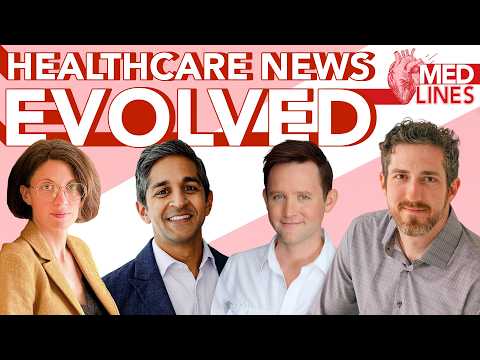
If you follow the Glaucomfleckens, you’ve likely heard they recently launched a weekly news podcast called Medlines. Along with Dr. Will Flanary, Dr. Alok Patel, and Eva Johnson, I’m one of the show’s rotation of anchors.
Part of what drew me to the team is their desire to help doctors and other busy medical professionals keep on top of watercooler medical news. Think of it as a tip sheet, vetted by doctors and intended as a quick listen. The New England Journal of Medicine is sponsoring our first season!
We also release episodes as video, but you’ll be fine with just audio. Episodes are 10-15 minutes, but as Dr. Flanary quipped, you can listen on 2x speed because he talks slowly.
That sense of humor is another plus on this project, along with the team’s optimism. Usually, we’re sharing headlines about important advancements that will improve patients’ lives. As we say on most episodes: It’s been a great week in medicine.
Of course, we want to make sure our format works for you. Drop us a line if you have feedback to help ensure we’re part of your balanced media diet!
Check out our most recent episode, and subscribe wherever you get your podcasts: