If your mental image of caregiving looks like giving aid to an elderly loved one dealing with things like mobility issues or memory loss at the end of their life, you’re probably among the majority. I think many people’s immediate perception of caregiving is as something that only happens in that context. Given how prevalent elder care is, it totally makes sense. But caregiving is so much broader – and often much less visible – than many people realize.
My own caregiving journey didn’t match this traditional narrative. Will’s health challenges began in his twenties – back when our biggest worries should have been finals and figuring out adulting. Before his cancers and sudden cardiac arrest, Will hadn’t experienced disability.
So, my caregiving role wasn’t about physically assisting him with daily tasks like bathing or moving around the house. Instead, it meant managing medications, coordinating endless appointments, navigating post-orchiectomy recoveries (twice!), and keeping our family running smoothly… all while juggling my own work and parenting two young kids. After Will’s cardiac arrest, caregiving also meant supporting him through significant memory loss and helping him ease into our new reality.
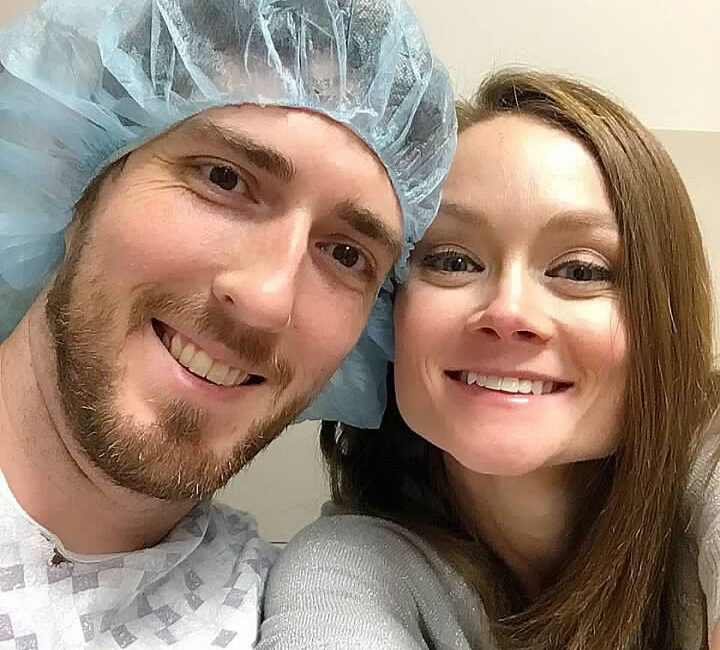
Amidst all that, I was also struggling with the impacts of a very specific trauma that I didn’t yet have the words to describe. Today, I know it as co-survivorship: the aftershock that hits the partner, the parent, the child, the friend, or the bystander who witnessed the crisis. In my case, I was also the one who saved him.
I heard his agonal breathing. I manually pumped his heart when it stopped. I watched his skin turn from pink to blue to gray while I tried desperately to send oxygen to his vital organs. Despite the relief and joy of bringing him back to life, those intense, agonizing memories stuck with me. They rewrote my whole life.
There was no easy way to explain why I couldn’t make conversation, why my eyes were vacant, or why I kept checking to make sure he was still breathing in his sleep. I just knew I had lived through something, but no one else seemed to see it.
Now, I understand that what happened to him also happened to me, just in a different way. Both of our lives were turned upside down by the same medical event.
And here’s the thing: we aren’t unique. In fact, the number of younger people who need care is growing. The percentage of American care recipients who are millennials – a demographic to which Will and I both firmly belong – rose from 5% to 7% between 2015 and 20201 . That’s millions of patients, and millions of caregivers and co-survivors along with them.
I would never wish what I experienced on anyone. But I know that there are others like me, and that they need support – especially if they’re also long-term caregivers.
When we were young, fresh-faced graduates suddenly faced with a cancer diagnosis, we found ourselves feeling incredibly out of place. The brochures and post-discharge instructions discussed issues related to advanced age – not our stage of life.
We were always the youngest ones in the oncology waiting rooms, and we had a ton of questions and concerns as a young family just starting out that were never really addressed. Those unanswered questions were also echoed in my own journey as the co-survivor; the forgotten patient.
I see our story now as a reflection of two things:
- The necessity of meeting patients and their loved ones where they’re at, and providing more clarity than questions when possible.
- How diverse the co-survival and caregiving experiences can be.
Even within similar age groups, the specific needs of care recipients vary dramatically. Will maintained his mobility, but many others his age don’t. And the caregiving journey itself? Wildly different based on factors like employment, parenting responsibilities, financial stability, and even the caregiver’s own health needs. Let’s also not forget how cultural, racial, and ethnic factors shape caregiving experiences – from the way we view caregiving itself, to the financial impacts, to the expectations placed on caregivers.
Co-survivorship also has its own unique intersections with caregiving. Not all caregivers are co-survivors, and not all co-survivors are caregivers, but the center of the Venn diagram is fairly large. And for those of us who are co-survivors, the experience comes with its own set of challenges.
The truth is, co-survivorship and caregiving don’t have a single face. There’s no universal template. The only thing I can confidently say that all we need is to be met where we’re at.
For healthcare providers, this might mean taking an extra minute to ask a caregiver or co-survivor, “Hey, how are you really doing?”
For friends and family, maybe it’s quietly handling the chores we’ll never ask for help with – laundry, meals, errands.
No matter how you step in, your empathy and practical support matter deeply to those of us navigating this complex role. And if you are a caregiver or co-survivor, I want to close by sharing these resources with you:
- Share the Care: This organization provides a comprehensive approach to creating and maintaining a caregiving network. Their website offers guidance, tools, and practical resources for caregivers.
- Negative Space: The Negative Space website aims to change how caregivers are seen and supported. Acknowledging their challenges, it offers direct services, education, and support to make them feel less alone. Supporters are vital in encouraging caregivers, providing simple ways and caregiver gift boxes to reinforce appreciation.
- Family Caregiver Alliance: The Family Caregiver Alliance offers an extensive range of resources, information, and support for caregivers. Their website provides educational materials, support groups, and a section on the caregiver’s journey that addresses various caregiving-related topics.
- My resources page: Over the years, I’ve gathered articles, books, research, and more writing that helped me process my experience; and can help the system build better for the future. I’ve put them all together in this handy resource page – which also includes some pieces I’ve written myself.